Roujiren Hu Kang Robot System: The World's Leading Elderly Care Robot? — Liu Dongguang

The answer is yes. The system's global leadership is defined by four core advantages:
1. Most comprehensive feature set, strongest caregiving capabilities
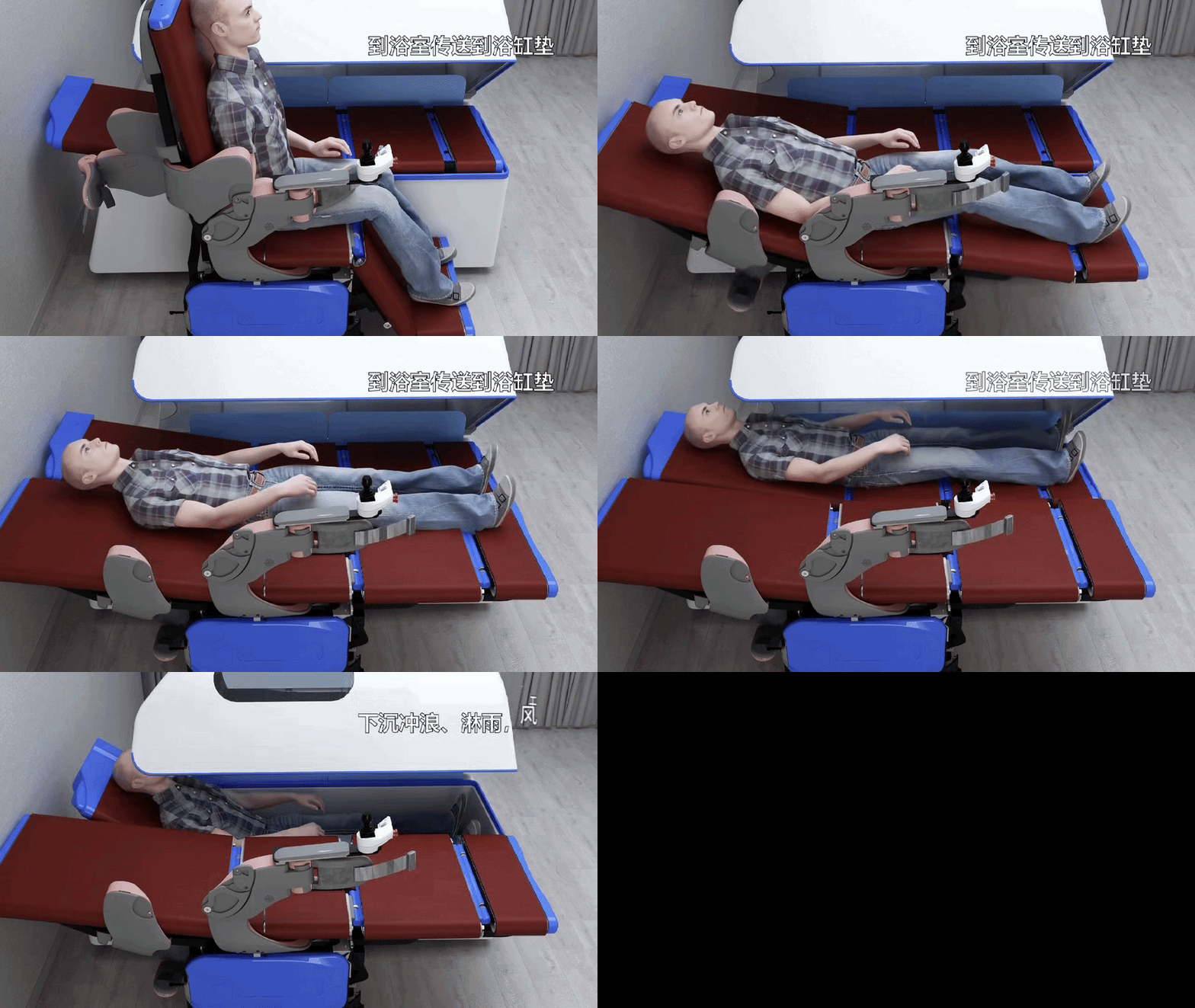
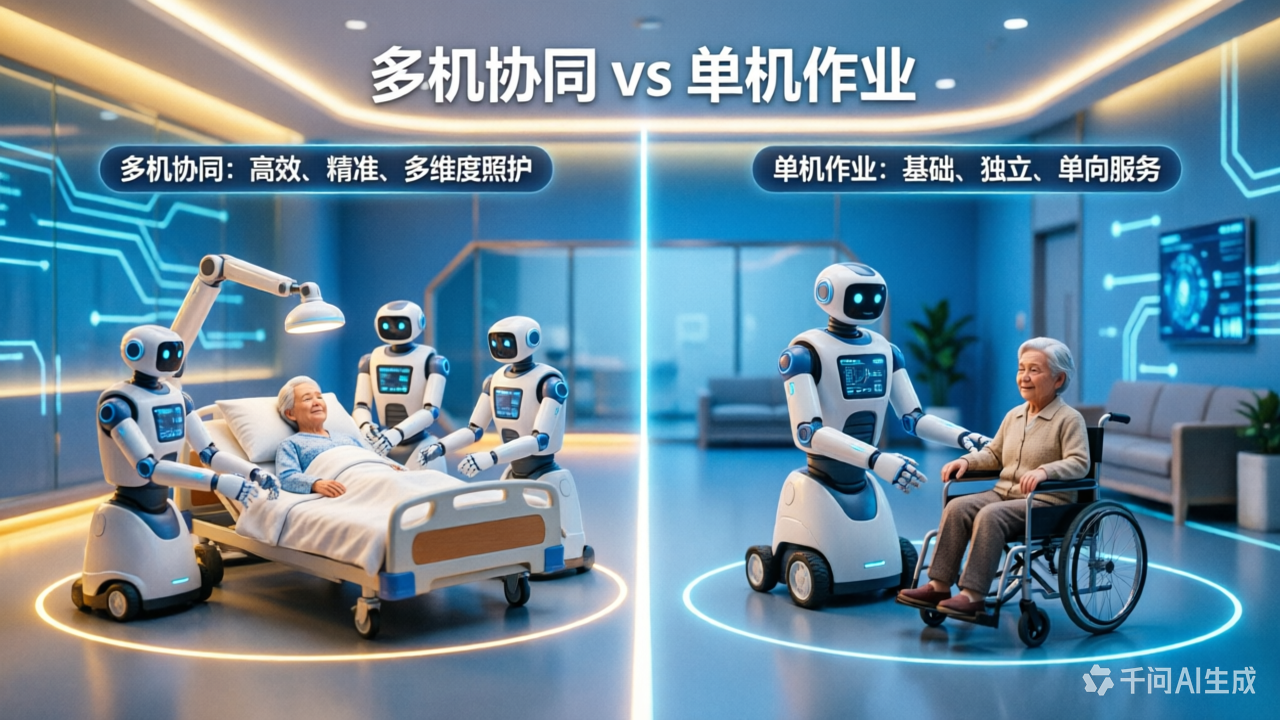
Currently, mainstream global care and rehabilitation robots operate as single-function units, akin to individual caregivers. Their adaptability to the needs of severely disabled elderly is extremely limited, with significant functional fragmentation: a robot that assists with bed transfers cannot provide bathing services; one that aids toileting cannot perform limb rehabilitation training. This prevents seamless, comprehensive care across all scenarios. In contrast, the Roujiren Care Robot System adopts a multi-robot collaborative model, functioning as a professional, end-to-end care team. Through flexible device combinations, it delivers a complete suite of automated care services for severely disabled elderly individuals—including bed transfers, indoor/outdoor mobility assistance, toileting, bathing, and limb rehabilitation training—all in one integrated solution. Its comprehensive care capabilities significantly outperform all existing single-function elder care and rehabilitation robots on the market.
II. Core Technologies: Original and Globally Leading
Global养老 robots are primarily categorized into three types: companionship, nursing, and rehabilitation. Roujiren focuses on the two core areas of nursing and rehabilitation. Leveraging its proprietary technologies—multi-robot collaborative control, automatic device docking, and flexible human transport—the company has broken through industry technical barriers and maintains a leading global position in key nursing and rehabilitation robot technologies.
III. Leading global progress in mass production deployment
Current global elderly care robots suffer from immature technology, limited functionality, and an inability to meet the practical needs of care facilities. These challenges prevent large-scale mass production and keep equipment costs high. The three core issues—technical shortcomings, functional limitations, and excessive costs—mean there are no mature elderly care robots available for widespread deployment in care institutions today.
In contrast, the Roushiren Care + Rehabilitation Integrated Robot System has successfully entered the pilot production phase. Over 20 units have been manufactured in small batches and deployed in nursing homes for long-term real-world validation. Within six months, it is expected to become the world's first integrated elderly care and rehabilitation robot system to achieve large-scale mass production and commercial deployment.
4. Affordable and inclusive pricing with the best value globally
After mass production, the full suite of nursing or rehabilitation robot systems will be priced at approximately 10 thousand yuan. Compared to similar industry equipment, a single non-fully-automatic bathing tub from abroad costs as high as 120 thousand yuan, while standalone upper or lower limb rehabilitation robots exceed 300 thousand yuan. Domestic single-limb rehabilitation robots also start above 70 thousand yuan. Additionally, our modular smart care devices are 10~20 times more affordable than single-function elderly care robots from Japan and other countries. This exceptional value allows small and medium-sized facilities, as well as standard care institutions, to easily adopt these solutions. For home users, with reimbursement through long-term care insurance and relevant elderly care policy subsidies, the out-of-pocket cost is only tens of thousands of yuan—far lower than the ongoing expense of hiring in-home caregivers—significantly reducing the long-term financial burden on families caring for disabled seniors.
Share this article
Related Reading