Soft
Roujiren
Return news list
Industry News
2026-6-18
145read

The Present and Future of Elderly Care Robots – Original by Liu Dongguang

The Present and Future of Elderly Care Robots – Original by Liu Dongguang

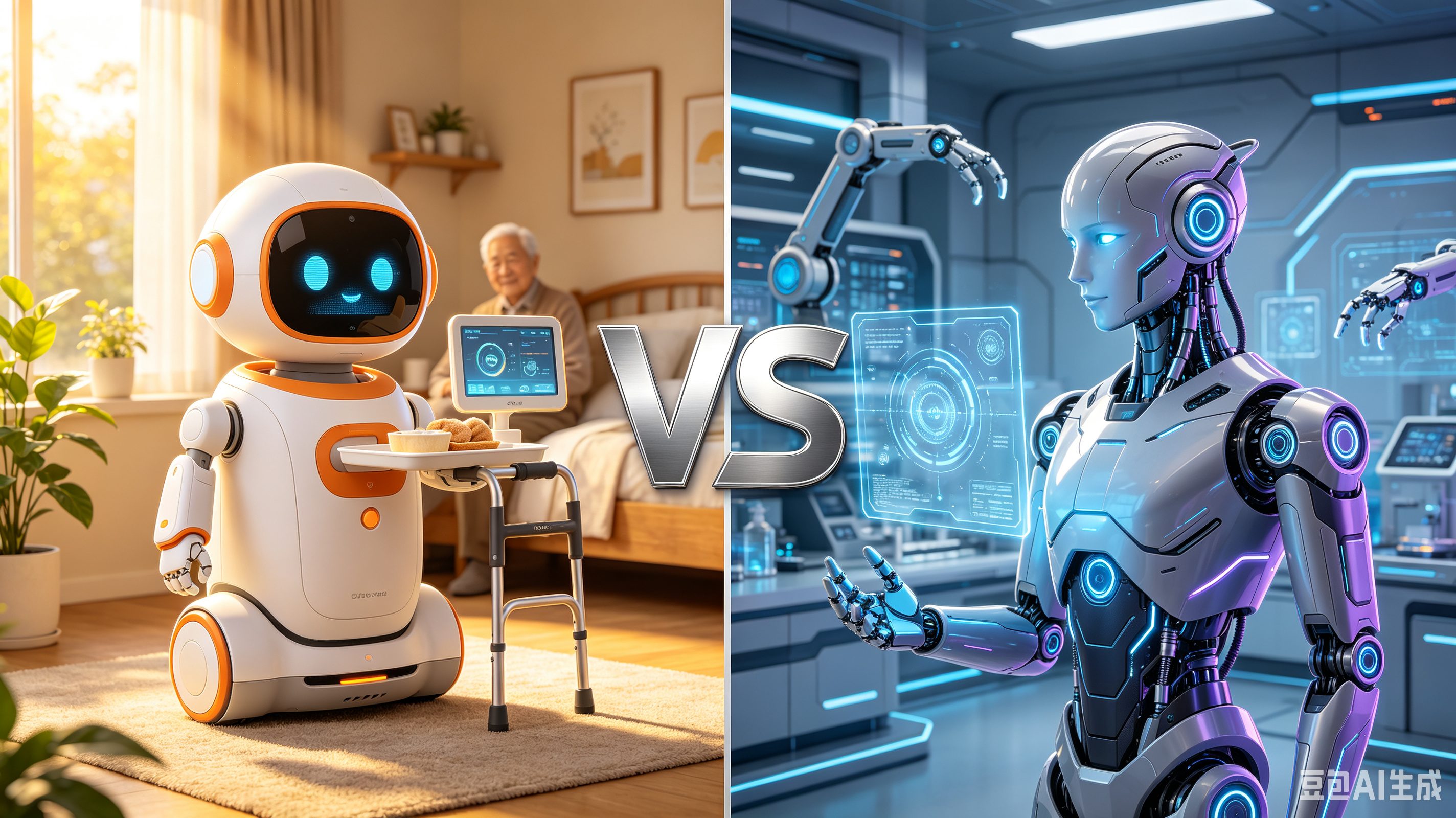
AwesomeMost people's understanding of eldercare robots comes from online sources, media reports, or films and TV shows. In the public imagination, these robots are seen as all-purpose housekeepers capable of serving tea and water, cleaning, and even cooking. However, such imagined devices do not represent true eldercare robots. From a professional perspective in the eldercare industry, eldercare robots are specialized service robots designed for individuals with disabilities, providing daily living assistance, physical rehabilitation training, and psychological emotional interaction.

ThinkTo help everyone clearly understand care robots, let's start with a basic classification overview.

MachineRobots are artificial intelligence devices categorized into industrial robots and service robots. Industrial robots are primarily used in manufacturing processes, with six-axis robotic arms as the typical example; they are now widely deployed across automated production lines in various factories. Service robots handle non-production tasks and are further divided into three categories: consumer, professional, and special-purpose. Consumer service robots include models for cleaning, housekeeping, dining, education, entertainment, consulting, and tourism. They feature low application risk and do not require complex professional skills. Professional service robots cover fields such as healthcare, elderly care, and business sales. These have high entry barriers and rely on advanced technical expertise. Special-purpose robots operate in hazardous environments like military operations, exploration, disaster relief, radiation zones, and chemical toxin handling, often far from general public areas.

RaiseLegacy robots fall under the category of professional elderly care robots. Based on their functions, they are further classified into three types: elderly companionship, elderly care assistance, and elderly rehabilitation.

RaiseThe traditional companion robot serves as a bionic companion and interaction interface for seniors. Leveraging intelligent information technology, it primarily provides basic services such as emotional support, psychological comfort, and casual conversation. The next generation of companion robots expands these capabilities to include physiological monitoring, activity recognition, and home security surveillance. It also supports convenient services like online medical appointment booking, emergency calling, and life consultations. Suitable for both independent seniors and those with disabilities, it remains more of an experiential product rather than an essential necessity in elderly care.

RaiseTraditional rehabilitation robots are essentially specialized training devices for limb movement. They use exoskeletons, flexible traction ropes, and other structures to drive the elderly's limbs through various types of exercise training—including active, passive, resistive, and assisted modes—to strengthen muscle power and help damaged limbs gradually regain motor function.

RaiseThe senior care robot is an intelligent assistant for caregivers, designed to support or even replace human staff in helping immobile elderly individuals with daily activities such as dressing, eating, transferring between bed and wheelchair, indoor and outdoor mobility, toileting, and bathing.

RaiseThe core users of legacy robots are frail elderly individuals whose mobility is limited, requiring assistance from caregivers or intelligent devices to perform daily activities. Common causes of frailty include age-related physiological decline, acute and chronic illnesses, injuries, and post-surgical complications.

OKDisability levels are typically categorized based on six daily living activities: dressing, eating, getting in and out of bed, toileting, and bathing. Loss of 1 to 2 functions indicates mild disability; 3 to 4 indicates moderate disability; and 5 to 6 indicates severe disability. Most elderly individuals who are bedridden fall into the moderate or severe disability categories.

LostElderly care, especially for bedridden and disabled seniors, remains a critical pain point in the senior care industry.

UploadIn the standard model, manual care for bedridden, disabled elderly individuals is categorized into two types: "close personal attentive care" and "close personal physically demanding care."

PostComprehensive bedridden care includes turning the patient on schedule to prevent pressure ulcers, elevating the head of the bed to maintain a semi-recumbent position for clear breathing, assisting with mucus clearance, adjusting positioning to prevent sliding, managing feeding to avoid choking and aspiration, and providing immediate hygiene for in-bed toileting. These tasks require minimal physical exertion but demand attention to detail and patience; typically, one caregiver can handle them. However, prolonged immobility can lead to progressive muscle atrophy, joint stiffness, pressure sores, deep vein thrombosis, and other serious complications that may become life-threatening. Therefore, the industry encourages increasing off-bed activity whenever possible—such as eating out of bed, moving indoors and outdoors, warm-water bathing and physiotherapy, and regular rehabilitation exercises—to seize opportunities for proactive health management and delay or even reverse functional decline. Such off-bed care often requires two or more caregivers working together to provide close physical support and assist with lifting and movement.

PostCaring for bedridden, disabled elderly people is a high-difficulty, high-risk task. It faces four key challenges: 1) Two-person or multi-person assistance requires precise coordination; improper teamwork can easily cause secondary injuries to the patient. 2) Caregivers need significant physical strength; fatigue increases the risk of dropping or bumping the patient. 3) At least two caregivers are required, doubling labor costs while reducing overall efficiency. 4) Home and institutional care spaces are often too small, limiting the ability of multiple staff to work effectively.

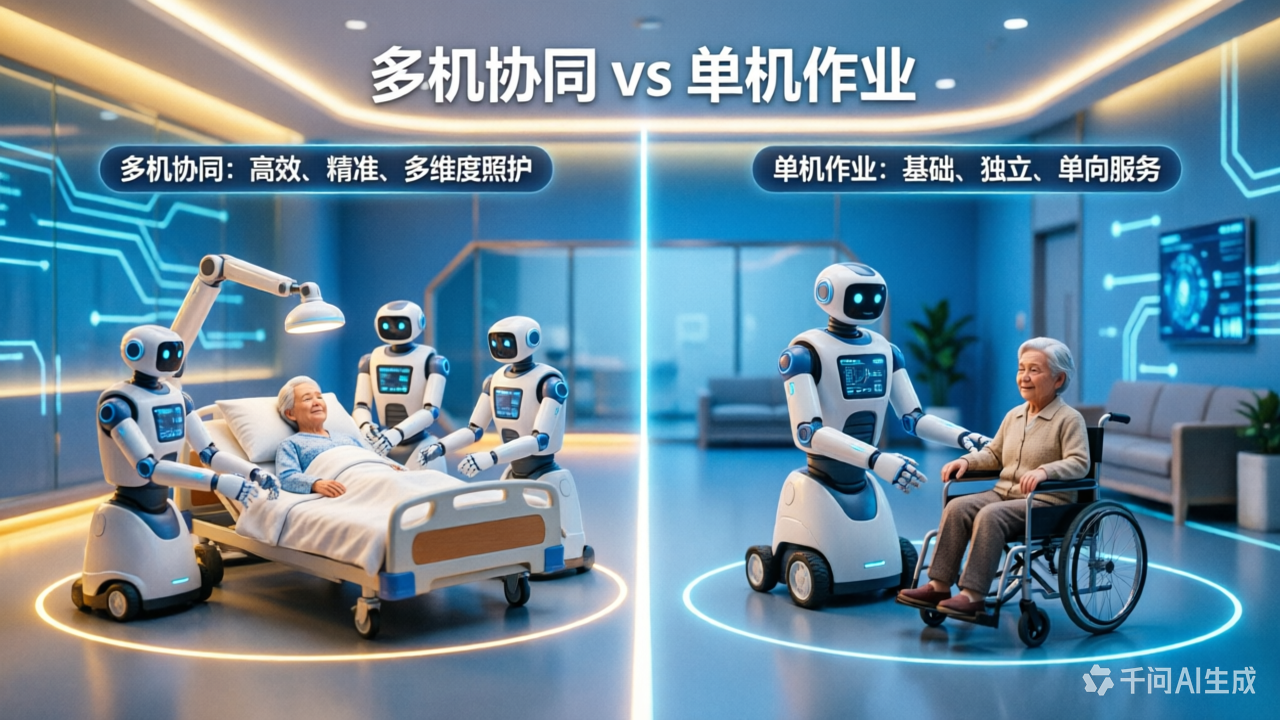
UseCare robots for elderly and bedridden disabled individuals represent an ideal solution. These care and rehabilitation robots are powerful enough to operate 24 hours continuously without fatigue, delivering higher care efficiency while effectively controlling long-term comprehensive costs. However, across the global market today, most existing care and rehabilitation robots operate as standalone units, generally lacking automatic docking and undocking capabilities. This makes it difficult to fully handle close-contact, load-bearing scenarios such as transferring bedridden patients out of bed, bathing, or conducting rehabilitation training. Without automatic docking and undocking functions, complete replacement of human caregivers is unachievable; critical steps like placing the robot on the patient and removing it still require manual assistance.

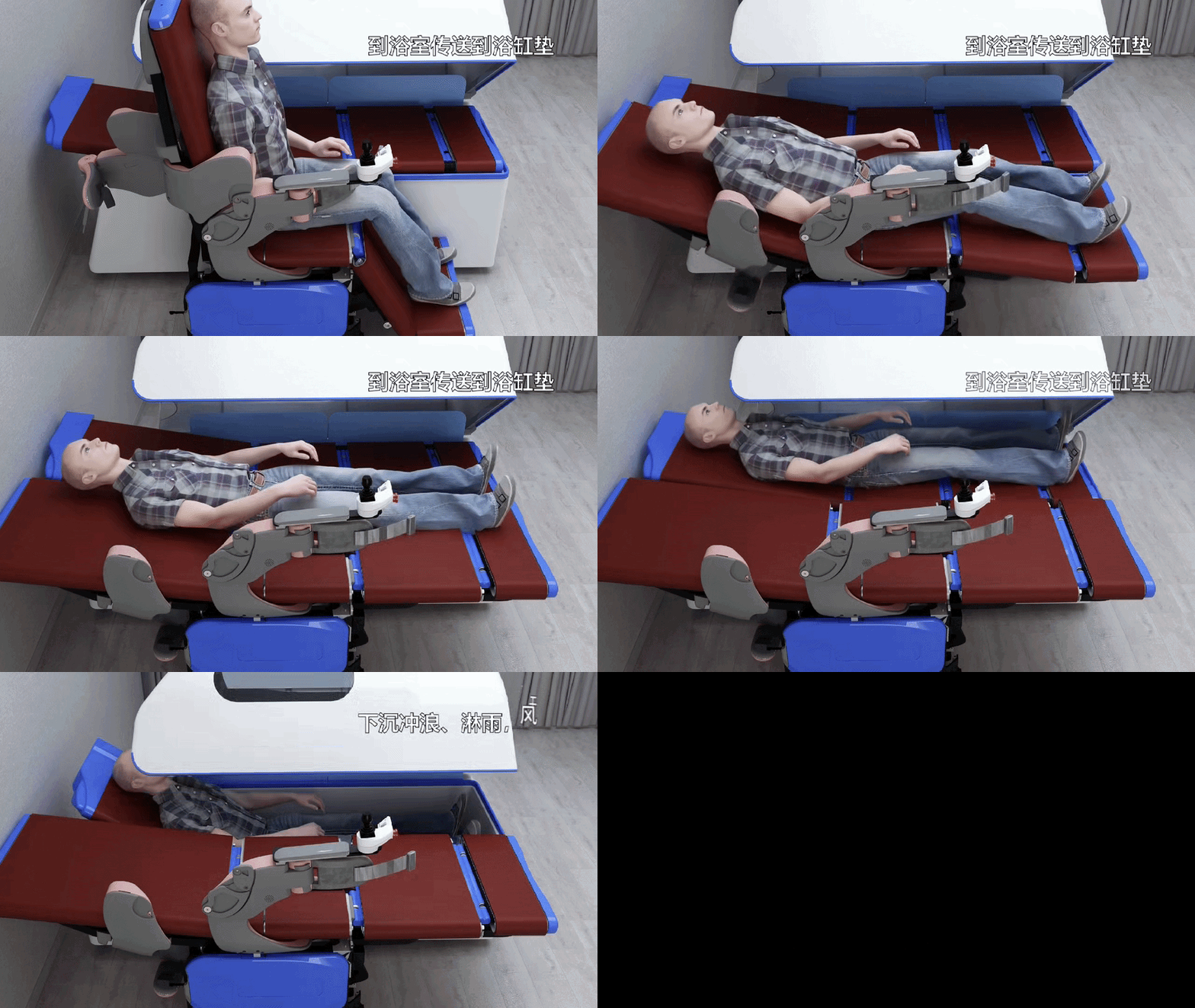
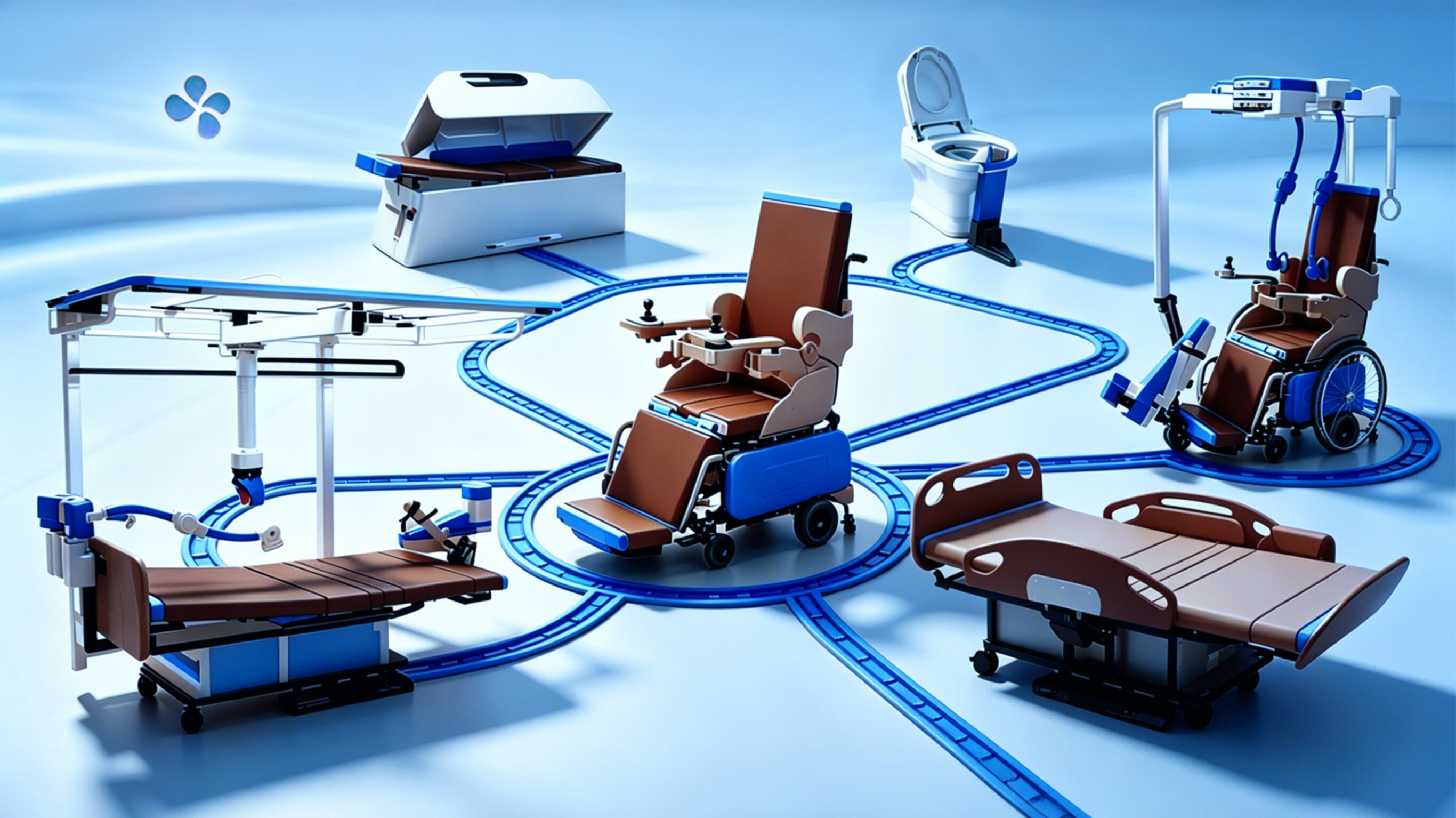
WhenHome care and rehabilitation robots for bedridden, disabled seniors face three world-class challenges that have remained unsolved for over 40 years by leading nations in robotic elderly care, including the U.S., Europe, and Japan: automatic transfer between a bed and a wheelchair, between a wheelchair and a bathtub, and between a wheelchair and a rehabilitation robot. To date, no养老 robot globally has successfully achieved all three cross-device, cross-scenario transfers. Guangzhou Roujiren's newly developed Hukang Robot System shatters these three global technical barriers through its proprietary multi-robot collaboration model and core technology for automated boarding and disembarking.

This Huakang robot system integrates an intelligent conveyor nursing bed, smart wheelchair, smart bathtub, smart toilet, and bed/chair-based rehabilitation robots. Elderly users can transfer automatically from the bed to the wheelchair with a single tap. The wheelchair enables seamless indoor and outdoor mobility, allowing independent access to the restroom for toileting, the bathroom for bathing, and rehabilitation equipment for limb exercises. After completing all activities, users can return to their bed automatically with one touch.

End

SiteToday, the elderly care robot industry remains constrained by isolated single-device solutions, fragmented application scenarios, and heavy reliance on human labor for intensive care. These limitations, combined with public misconceptions and core technical barriers, hinder widespread adoption in essential caregiving settings. Looking ahead, integrated health and care systems featuring multi-robot collaboration and fully autonomous workflow management represent the key to breaking through these challenges. The Roujiren Care Robot System bridges bed, chair, bath, rehabilitation, and toilet care into a complete lifecycle solution, offering a transformative approach to caring for bedridden and disabled seniors. In the future, elderly care robots will evolve beyond superficial roles like basic companionship or point-specific nursing, advancing toward full-scenario coordination, end-to-end intelligence, and comprehensive cycle-based care. This evolution will alleviate family caregiving burdens, reduce operational costs for care facilities, and serve as a critical intelligent foundation for enhancing China's social elderly care service system—empowering the silver economy with technology to ensure dignified, high-quality lives for millions of disabled seniors.

Share this article

Yue ICP Bei 2021033323 Hao-1|Guangdong Provincial Public Security Bureau Network Security License No. 44011102484807